
Topics
Light and environment
Daylight, screens, sun and the modern environment you live in.
Morning light, sun exposure and vitamin D, screens at night, water quality and everyday chemical exposures. Where research is thin, we say so.
What the minds agree on
Where the experts we follow point the same way.

The experts agree
Digital detox
Taking intentional breaks from digital devices can refresh mental energy and support real-life connections.

The experts agree
Forest bathing
Forest bathing offers gentle stress relief, mood improvement, and helps balance the nervous system.
The experts agree
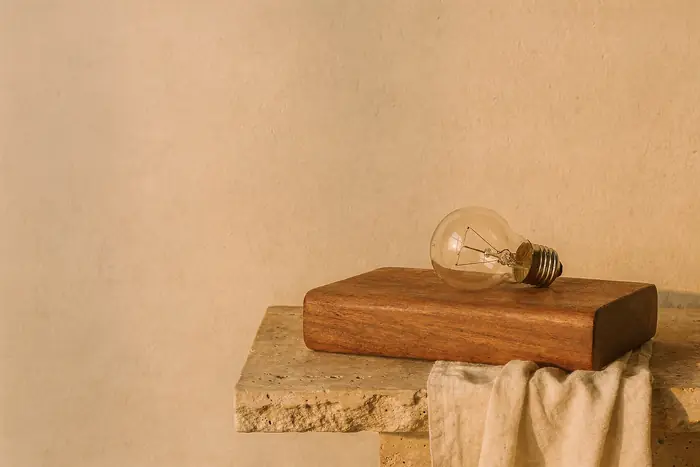
Incandescent bulb
Incandescent bulbs are a gentle, low-blue light option for home lighting, supporting circadian health.

The experts agree
Infrared light therapy
Infrared light therapy is widely valued for supporting mitochondria and relaxation.

The experts agree
Light environment optimisation
Optimising your light environment supports circadian rhythms, mitochondrial function, and overall well-being.

The experts agree
Mineral-rich water
Mineral-rich water is a simple way to support hydration and mineral needs every day.

The experts agree
Natural environment exposure
Time in nature is a simple, effective way to support mental and physical well-being.

The experts agree
Natural light exposure
Natural light exposure is essential for healthy circadian rhythms and mood.

The experts agree
Outdoor time
Spending time outdoors supports circadian rhythms, resilience, and mental well-being.
The experts agree
Red and infrared light
Red and infrared light support mitochondrial function and skin resilience.
The experts agree
Reducing household toxins
Reduce exposure to environmental and household toxins to support hormone regulation, microbiome health, and overall wellbeing.

The experts agree
Safe sun exposure
Sensible sun exposure is strongly supported for vitamin D and cellular health.
The experts agree
Solar callus
Building a solar callus helps you enjoy the sun safely.
The experts agree
Water filtration
Filtering water is a simple way to reduce exposure to unwanted substances.
The experts agree
Wi-fi router
Turning off your Wi-Fi router at night is a simple way to reduce EMF exposure.

The experts agree
Air purifier
Air purifiers are strongly recommended for improving indoor air quality and reducing allergens.

The experts agree
Morning sunlight
Morning sunlight is a reliable way to set your body clock and support daily rhythm.

The experts agree
Light environment
A healthy light environment supports circadian rhythms and can have a big impact on metabolic health.

The experts agree
Infrared exposure
Infrared exposure helps support healthy blood flow and cellular energy production.

The experts agree
Grounding
Grounding may help reduce inflammation and support mitochondrial function.

The experts agree
Organic food
Organic food is strongly supported to reduce toxin exposure and support gut health.

The experts agree
Infrared light
Infrared light supports mitochondrial health and energy, especially for metabolism and detoxification.

The experts agree
UVA exposure
UVA light helps support dopamine, serotonin, and thyroid hormone production.

The experts agree
Red and near-infrared light therapy
Red and near-infrared light therapy supports mitochondrial function and is well-regarded for general health.

The experts agree
Airplane mode
Using airplane mode is a practical step to reduce EMF exposure, especially during sleep.

The experts agree
Earthing
Earthing can help restore balance and support mitochondrial function in daily life.

The experts agree
Infrared sauna
Infrared sauna is warmly supported for gentle detox and vascular health.

The experts agree
Red light
Red light is valued for supporting mitochondrial function and healthy circadian rhythms.
The experts agree
Near infrared light
Near infrared light supports mitochondrial repair and energy, especially after exercise.

The experts agree
Natural sun exposure
Natural sunlight is strongly supported for circadian health and mitochondrial function.

The experts agree
Full spectrum sunlight
Full spectrum sunlight is essential for circadian and mitochondrial health.

The experts agree
Red light exposure
Red light exposure supports skin and mitochondrial health, and helps prepare the body for sun exposure.

The experts agree
Midday sunlight exposure
Midday sunlight supports vitamin D, hormone balance, and mitochondrial health, making it a valuable daily habit.
The experts agree
Water
Staying hydrated with water is a simple, universal foundation for health.

The experts agree
Sunlight
Regular sunlight exposure supports vitamin D, thyroid, and healthy circadian rhythms.

The experts agree
Near-infrared light therapy
Near-infrared light therapy supports mitochondrial health and gentle recovery.

The experts agree
Circadian glasses
Circadian glasses help protect your rhythm from disruptive artificial light.

The experts agree
Sauna
Regular sauna use supports detox, heart health, and healthy ageing.
The experts agree
Red light device
Red light devices are a practical way to support physiology and may aid mitochondrial function.

The experts agree
Photobiomodulation
Photobiomodulation is promising for pain and repair, but more research is needed.
The experts agree
Wired headphones
Wired headphones reduce EMF exposure compared to wireless options.
The experts agree
Darkness
Embracing darkness at the right times supports circadian health and hormone regulation.

The experts agree
Sunrise
Catching the sunrise is a foundational practice for circadian and hormonal health.
The experts agree
Structured water
Structured water may support hydration and cellular health, especially when enriched with minerals.

The experts agree
Sauna bathing
Regular sauna bathing supports detoxification and heart health, and is warmly recommended for recovery.

The experts agree
Sun exposure
Regular sun exposure supports vitamin D, metabolism, and healthy circadian rhythms.
The experts agree
Blue blockers
Blue blockers are a reliable way to support healthy circadian rhythms.

The experts agree
Red light therapy
Red light therapy may support skin and mitochondria, but device quality varies widely.

The experts agree
Cold shower
Cold showers can boost alertness and mood, and support recovery.

The experts agree
Outdoor exposure
Getting outdoors regularly supports cardiovascular health and natural light exposure, even in winter.
The experts agree
Hyperbaric oxygen therapy
Hyperbaric oxygen therapy can support recovery and mitochondrial health for many people.
Also recommended
Most of them recommend these, some with conditions worth reading.

Most recommend it
Cutting plastic exposure
Reduce plastic use to limit exposure to endocrine disruptors and microplastics that may harm health.

Most recommend it
Dim lights after sunset
Dim lights after sunset to support circadian rhythm, hormone timing, and reduce blue light exposure at night.

Most recommend it
Glass containers
Using glass containers helps reduce toxin exposure and supports overall health.
Most recommend it
Red and near infrared light
Red and near-infrared light can support mitochondrial health and cellular energy, especially in modern lighting environments.

Most recommend it
Midday UVB exposure
Get regular UVB exposure to support vitamin D synthesis and immune modulation, adjusting for seasonal and daily timing.

Most recommend it
Spring water
Spring water is valued for hydration and lower deuterium, supporting mitochondrial health.
Most recommend it
Mineral sunscreen
Mineral sunscreen protects skin from sun damage while allowing healthy sun exposure elsewhere.

Most recommend it
Reverse osmosis filter
A reverse osmosis filter is recommended to reduce contaminants in tap water.
Most recommend it
Filtered water
Filtered water can reduce unwanted contaminants and support better hydration, especially when remineralized.

Most recommend it
Turmeric
Turmeric may support health and hydration, but moderation is key for best results.

Most recommend it
UV exposure
Brief UV exposure can support vitamin D and circadian health, but safety guidelines are still evolving.

Most recommend it
PEMF therapy
PEMF therapy may support mitochondrial health and recovery, though more research would help clarify its benefits.
Most recommend it
Distilled water
Distilled water is very pure, but may lack minerals found in other water sources.
Most recommend it
Light exposure
Getting daily light exposure is a cornerstone for healthy metabolism and long-term vitality.

Most recommend it
Grounding mat
Grounding mats may offer some benefits when outdoor grounding isn’t possible, though effects may be milder.

Most recommend it
Wi-fi
Turning off Wi-Fi at night may support restful sleep and cellular repair.
Worth exploring
Promising ideas with a smaller group behind them so far.
Worth exploring
Artificial light avoidance
Reducing artificial light, especially at night, helps keep your circadian system on track.
Worth exploring
Water filter
Filtering water may help reduce exposure to toxins and microplastics.
Worth exploring
Reverse osmosis water
Reverse osmosis water is worth exploring but may need remineralization.
Where they are split
Credible minds land on different sides. You see both.

The experts are split
Blue light at night
The panel is split on blue light at night, but many find reducing it helps sleep.
The experts are split
Sunscreen
The panel is split on sunscreen; balance sun exposure, vitamin D, and protective habits.

The experts are split
Artificial blue light
Our sources steer away from artificial blue light exposure.

The experts are split
Screen time limitation
The panel is split on strict screen time limits for kids.

The experts are split
Artificial light
The panel is split on artificial light, with concerns about nighttime exposure.
What they would skip
The weight of expert opinion leans away from these.

Most would skip it
Artificial light exposure
Our sources steer away from artificial light exposure, especially at night.
Most would skip it
Sunglasses
Our sources steer away from routine sunglasses use unless needed for eye protection.

Most would skip it
Screen time
Our sources steer away from evening screen time to support better sleep.

Most would skip it
Artificial blue light avoidance
Our sources steer away from strict artificial blue light avoidance as a primary strategy.

Most would skip it
Fluoride
Our sources steer away from supplemental fluoride due to concerns about mitochondrial and water health.
Go further
Tools and tests
- Daylight plannerYour town, your wake time, today's daylight: a schedule of light, meals and caffeine for the day.
- LuxA blood marker worth knowing
- Sauna temperatureA blood marker worth knowing
- Oxygen saturationA blood marker worth knowing
- Uv indexA blood marker worth knowing
- Sauna session durationA blood marker worth knowing
Books the minds teach from
- The Fourth Phase of WaterGerald H. Pollack
- Cells, Gels and the Engines of LifeGerald H. Pollack
- Embrace the SunMarc Sorenson
- Health and LightJohn Ott
- Photobiomodulation TherapeuticsDr. Kellogg
- The Rainbow and the WormMae-Wan Ho